For US Healthcare Professionals

For US Healthcare Professionals

Lowered SBP by 13.4 mm Hg† in patients with CKD stage 3–4 and difficult-to-control hypertension2,6,7
Established 48-week safety profile with no evidence of increased hyperkalemia or hypotension in clinical trials1,2,8,9
A once-daily tablet with no dietary restrictions1
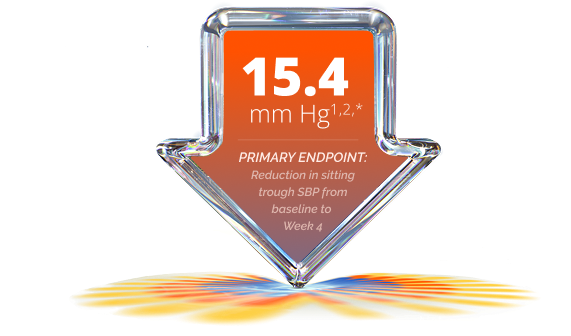
*97.5% CL, (-17.5, -13.3) Reduction in sitting trough SBP for the placebo group (n=244) was 11.6 mm Hg, for a difference of 3.8 vs TRYVIO (97.5% CL, [-6.8, -0.8]; P=0.0043).
†97.5% CL, (-17.4, -9.23) Reduction in sitting office SBP for the placebo group was 5.9 mm Hg (95% CL, [-10.44, -1.41]) for a difference of 7.5 vs TRYVIO.
CKD data were not adjusted for multiplicity and are descriptive only. No conclusions regarding efficacy can be made.2,6,7,10
CKD = chronic kidney disease; CL = confidence limit; ERA = endothelin receptor antagonist; MOA = mechanism of action; SBP = systolic blood pressure.


 New patients starting TRYVIO are eligible for a 30-day free trial offer*, regardless of insurance

Commercially eligible patients may receive TRYVIO for as little as $10† per month
*Eligible patients only. Limitations apply. This offer is good for a 30-day (maximum 30 tablets; one-time use) free trial of TRYVIO at no cost to your patient. See full Terms and Conditions.
†Limitations apply. For commercially eligible patients only. This offer is not valid under Medicare, Medicaid, or any other federal or state program. Patient must be 18 years of age or older and a resident of the United States.
See full
Terms and Conditions.
References: 1. TRYVIO™ (aprocitentan) [prescribing information]. Radnor, PA: Idorsia Pharmaceuticals US Inc; 2025. 2. Schlaich MP, Bellet M, Weber MA, et al; PRECISION investigators. Dual endothelin antagonist aprocitentan for resistant hypertension (PRECISION): a multicentre, blinded, randomised, parallel-group, phase 3 trial. Lancet. 2022;400(10367):1927-1937. Published correction appears in Lancet. 2023;401(10373):268. doi:10.1016/S0140-6736(23)00119-8 3. Davis M, Oparil, S. Novel medical treatments for hypertension and related comorbidities. Curr Hypertens Rep. 2018;20(10):90. doi:10.1007/s11906-018-0890-y 4. US FDA approves Idorsia’s once-daily TRYVIO (aprocitentan) – the first and only endothelin receptor antagonist for the treatment of high blood pressure not adequately controlled in combination with other antihypertensives. Media Release March 20, 2024. Accessed Jan 6, 2026. Accessed at: www.idorsia.com/dam/jcr:6ec86fd1-0d50-4508-bd8e-06166aed40d5/2024-aprocitentan-pdufa-media-release.pdf 5. Heidari Nejad S, Azzam O, Schlaich MP. Dual endothelin antagonism with aprocitentan as a novel therapeutic approach for resistant hypertension. Curr Hypertens Rep. 2023;25(10):343-352. doi:10.1007/s11906-023-01259-z 6. Rossignol P, Clozel M, Dreier RF, et al. Aprocitentan in patients with chronic kidney disease and resistant hypertension. Hypertension. Published online December 9, 2025. doi:10.1161/HYPERTENSIONAHA.125.25563 7. Data on File. PRECISION CSR. Idorsia. 2022. 8. Supplementary appendix to: Schlaich MP, Bellet M, Weber MA, et al; PRECISION investigators. Dual endothelin antagonist aprocitentan for resistant hypertension (PRECISION): a multicentre, blinded, randomised, parallel-group, phase 3 trial.Lancet. 2022;400(10367):1927-1937. doi:10.1016/S0140-6736(22)02034-7 9. Schiffrin EL, Fisher NDL. Diagnosis and management of resistant hypertension. BMJ. 2024;385:e079108. doi:10.1136/bmj-2023-079108 10. Bakris GL, et al. FR-OR96. J Am Soc Nephrol. 34(11S):56, Nov 2023. doi: 10.1681/ASN.20233411S156b
TRYVIO is contraindicated:
Based on data from animal reproduction studies with endothelin receptor antagonists (ERAs), TRYVIO may cause fetal harm when administered during pregnancy and is contraindicated for use in patients who are pregnant. The available human data for endothelin receptor antagonists do not establish the presence or absence of fetal harm related to the use of TRYVIO. Counsel patients who can become pregnant about the potential risk to a fetus. Obtain a pregnancy test prior to initiation of treatment with TRYVIO. Advise patients who can become pregnant to use effective contraception during treatment, and for one month after the final dose of TRYVIO. When pregnancy is detected, discontinue TRYVIO as soon as possible.
Elevations of aminotransferases and hepatotoxicity are known effects of ERAs, including TRYVIO. Elevations in alanine transaminase (ALT) or aspartate aminotransferase (AST) of greater than 5-fold upper limit of normal (ULN) were observed rarely in patients treated with aprocitentan in the clinical trial, including cases with positive rechallenge. To reduce the risk of potential serious hepatotoxicity, measure serum aminotransferase levels and total bilirubin prior to initiation of treatment and repeat during treatment periodically and as clinically indicated.
Do not initiate TRYVIO in patients with elevated aminotransferases (>3 × ULN) or moderate to severe hepatic impairment. Advise patients with symptoms suggesting hepatotoxicity (nausea, vomiting, right upper quadrant pain, fatigue, anorexia, scleral icterus, jaundice, dark urine, fever, or itching) to immediately stop treatment with TRYVIO and seek medical attention.
If sustained, unexplained, clinically relevant aminotransferase elevations occur, or if elevations are accompanied by an increase in bilirubin >2 × ULN, or if clinical symptoms of hepatotoxicity occur, discontinue TRYVIO.
Fluid retention and peripheral edema are known effects of ERAs, including TRYVIO. Edema/fluid retention was reported in 9% of TRYVIO-treated patients compared with 18% of patients receiving aprocitentan 25 mg (twice the recommended dose) and 2% on placebo in the clinical trial, requiring additional diuretic use in some patients. Older age and chronic kidney disease are risk factors for edema/fluid retention with TRYVIO. TRYVIO has not been studied in patients with heart failure New York Heart Association stage III–IV, unstable cardiac function, or with NTproBNP ≥500 pg/mL. TRYVIO is not recommended in these patients.
Monitor for signs and symptoms of fluid retention, weight gain, and worsening heart failure. If clinically significant fluid retention develops, treat appropriately, and consider discontinuation of TRYVIO.
Decreases in hemoglobin concentration and hematocrit have occurred following administration of other ERAs and were observed in the clinical trial with TRYVIO. Hemoglobin decreases usually presented early, stabilized thereafter, and were reversible after discontinuation. A decrease in hemoglobin of >2 g/dL from baseline was observed in 7% of patients compared to 1% of placebo patients. A decrease to below 10.0 g/dL was observed in 3% of TRYVIO-treated patients compared to 0 patients taking placebo. Initiation of TRYVIO is not recommended in patients with severe anemia. Measure hemoglobin prior to initiation of treatment and periodically during treatment as clinically indicated.
TRYVIO, like other ERAs, may have an adverse effect on spermatogenesis. Counsel men about potential effects on fertility.
The most common adverse reactions (more frequent than placebo and ≥2% in TRYVIO-treated patients) are edema/fluid retention and anemia.
There are no data on the presence of aprocitentan in human milk, the effects on the breastfed infant, or the effect on milk production. Because of the potential for serious adverse reactions in breastfed infants, advise women not to breastfeed during treatment with TRYVIO.
TRYVIO is not recommended in patients with kidney failure (eGFR <15 mL/min) or on dialysis. Patients with renal impairment are at increased risk of edema/fluid retention.
TRYVIO is not recommended in patients with moderate and severe hepatic impairment (Child-Pugh class B and C) because these patients may be at increased risk for poor outcomes from hepatotoxicity.
You are encouraged to report negative side effects of prescription drugs to the FDA. Visit www.fda.gov/medwatch or call 1-800-FDA-1088. Please see full Prescribing Information including BOXED Warning and Medication Guide.
TRYVIO is an endothelin receptor antagonist indicated for the treatment of hypertension in combination with other antihypertensive drugs, to lower blood pressure in adult patients who are not adequately controlled on other drugs. Lowering blood pressure reduces the risk of fatal and non fatal cardiovascular events, primarily strokes and myocardial infarctions.
TRYVIO is contraindicated:
Based on data from animal reproduction studies with endothelin receptor antagonists (ERAs), TRYVIO may cause fetal harm when administered during pregnancy and is contraindicated for use in patients who are pregnant. The available human data for endothelin receptor antagonists do not establish the presence or absence of fetal harm related to the use of TRYVIO. Counsel patients who can become pregnant about the potential risk to a fetus. Obtain a pregnancy test prior to initiation of treatment with TRYVIO. Advise patients who can become pregnant to use effective contraception during treatment, and for one month after the final dose of TRYVIO. When pregnancy is detected, discontinue TRYVIO as soon as possible.
Elevations of aminotransferases and hepatotoxicity are known effects of ERAs, including TRYVIO. Elevations in alanine transaminase (ALT) or aspartate aminotransferase (AST) of greater than 5-fold upper limit of normal (ULN) were observed rarely in patients treated with aprocitentan in the clinical trial, including cases with positive rechallenge. To reduce the risk of potential serious hepatotoxicity, measure serum aminotransferase levels and total bilirubin prior to initiation of treatment and repeat during treatment periodically and as clinically indicated.
Do not initiate TRYVIO in patients with elevated aminotransferases (>3 × ULN) or moderate to severe hepatic impairment. Advise patients with symptoms suggesting hepatotoxicity (nausea, vomiting, right upper quadrant pain, fatigue, anorexia, scleral icterus, jaundice, dark urine, fever, or itching) to immediately stop treatment with TRYVIO and seek medical attention.
If sustained, unexplained, clinically relevant aminotransferase elevations occur, or if elevations are accompanied by an increase in bilirubin >2 × ULN, or if clinical symptoms of hepatotoxicity occur, discontinue TRYVIO.
Fluid retention and peripheral edema are known effects of ERAs, including TRYVIO. Edema/fluid retention was reported in 9% of TRYVIO-treated patients compared with 18% of patients receiving aprocitentan 25 mg (twice the recommended dose) and 2% on placebo in the clinical trial, requiring additional diuretic use in some patients. Older age and chronic kidney disease are risk factors for edema/fluid retention with TRYVIO. TRYVIO has not been studied in patients with heart failure New York Heart Association stage III–IV, unstable cardiac function, or with NTproBNP ≥500 pg/mL. TRYVIO is not recommended in these patients.
Monitor for signs and symptoms of fluid retention, weight gain, and worsening heart failure. If clinically significant fluid retention develops, treat appropriately, and consider discontinuation of TRYVIO.
Decreases in hemoglobin concentration and hematocrit have occurred following administration of other ERAs and were observed in the clinical trial with TRYVIO. Hemoglobin decreases usually presented early, stabilized thereafter, and were reversible after discontinuation. A decrease in hemoglobin of >2 g/dL from baseline was observed in 7% of patients compared to 1% of placebo patients. A decrease to below 10.0 g/dL was observed in 3% of TRYVIO-treated patients compared to 0 patients taking placebo. Initiation of TRYVIO is not recommended in patients with severe anemia. Measure hemoglobin prior to initiation of treatment and periodically during treatment as clinically indicated.
TRYVIO, like other ERAs, may have an adverse effect on spermatogenesis. Counsel men about potential effects on fertility.
The most common adverse reactions (more frequent than placebo and ≥2% in TRYVIO-treated patients) are edema/fluid retention and anemia.
There are no data on the presence of aprocitentan in human milk, the effects on the breastfed infant, or the effect on milk production. Because of the potential for serious adverse reactions in breastfed infants, advise women not to breastfeed during treatment with TRYVIO.
TRYVIO is not recommended in patients with kidney failure (eGFR <15 mL/min) or on dialysis. Patients with renal impairment are at increased risk of edema/fluid retention.
TRYVIO is not recommended in patients with moderate and severe hepatic impairment (Child-Pugh class B and C) because these patients may be at increased risk for poor outcomes from hepatotoxicity.
You are encouraged to report negative side effects of prescription drugs to the FDA. Visit www.fda.gov/medwatch or call 1-800-FDA-1088. Please see full Prescribing Information including BOXED Warning and Medication Guide.
TRYVIO is an endothelin receptor antagonist indicated for the treatment of hypertension in combination with other antihypertensive drugs, to lower blood pressure in adult patients who are not adequately controlled on other drugs. Lowering blood pressure reduces the risk of fatal and non fatal cardiovascular events, primarily strokes and myocardial infarctions.
This information is intended for US healthcare professionals. Click the "CONTINUE" button below to verify that you are a US healthcare professional or use the "GO BACK" button to return to the previous page.